WiTricity

WiTricity

Delivering next-gen EV technology through high-charged collaboration.

Overview

Fast-tracking a new wireless charging system from whiteboard sketch to product in just nine months.

The journey from idea to working prototype can be a multi-year marathon. WiTricity teamed up with Fresco to fast-track the design of their unique wireless charging product for golf carts and NEVs (neighborhood electric vehicles). Through close collaboration, the project advanced from ideation to production-intent working prototypes in just nine months, involving rapid iterations, hands-on development, and thorough testing.

Client

WiTricity

Services

Design Innovation
,
Industrial Design
,
Human Factors & Ergonomics
,
In-House Prototyping
,
Product Development
,

Industry

Wireless EV Charging
,
Two electronic devices on a white surface: on the left, a black and white flat square device with ventilation slits and a cable plugged in, labeled 'WiTricity'; on the right, a smaller rectangular black device with a textured angled surface and ventilation slits.
A person's hands holding a beige-colored triangular component above an open metallic electronic device with horizontal ventilation slots on a desk with a gray carpeted floor background.
Top-down view of three square-shaped wireless charging pads with a layered, slightly translucent design and dark outer frames.
Sketch of a golf cart with technical annotations highlighting adjustable front and back supports for wheels and integrated heat sink placement.

Effortless EV charging with WiTricity

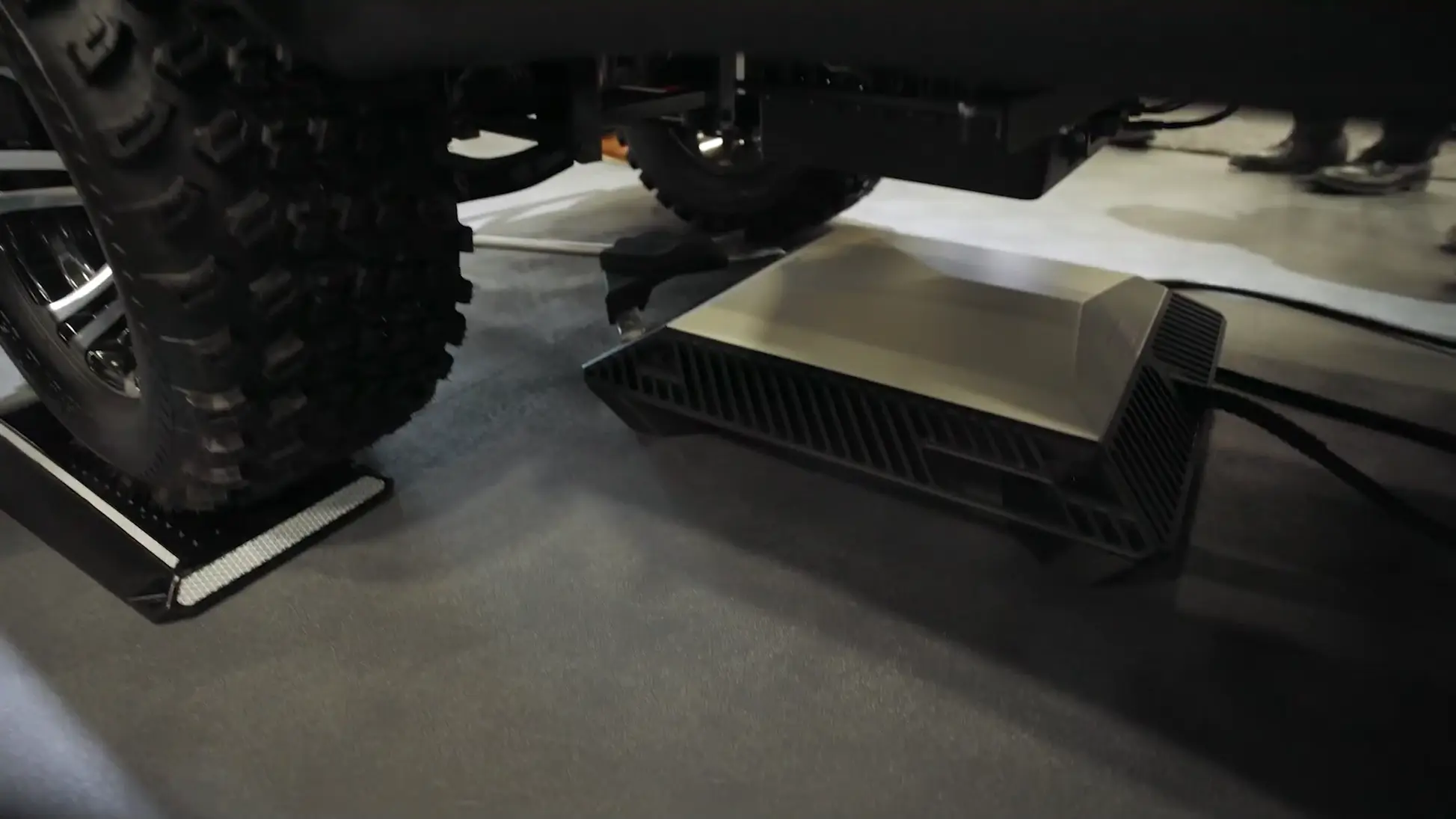
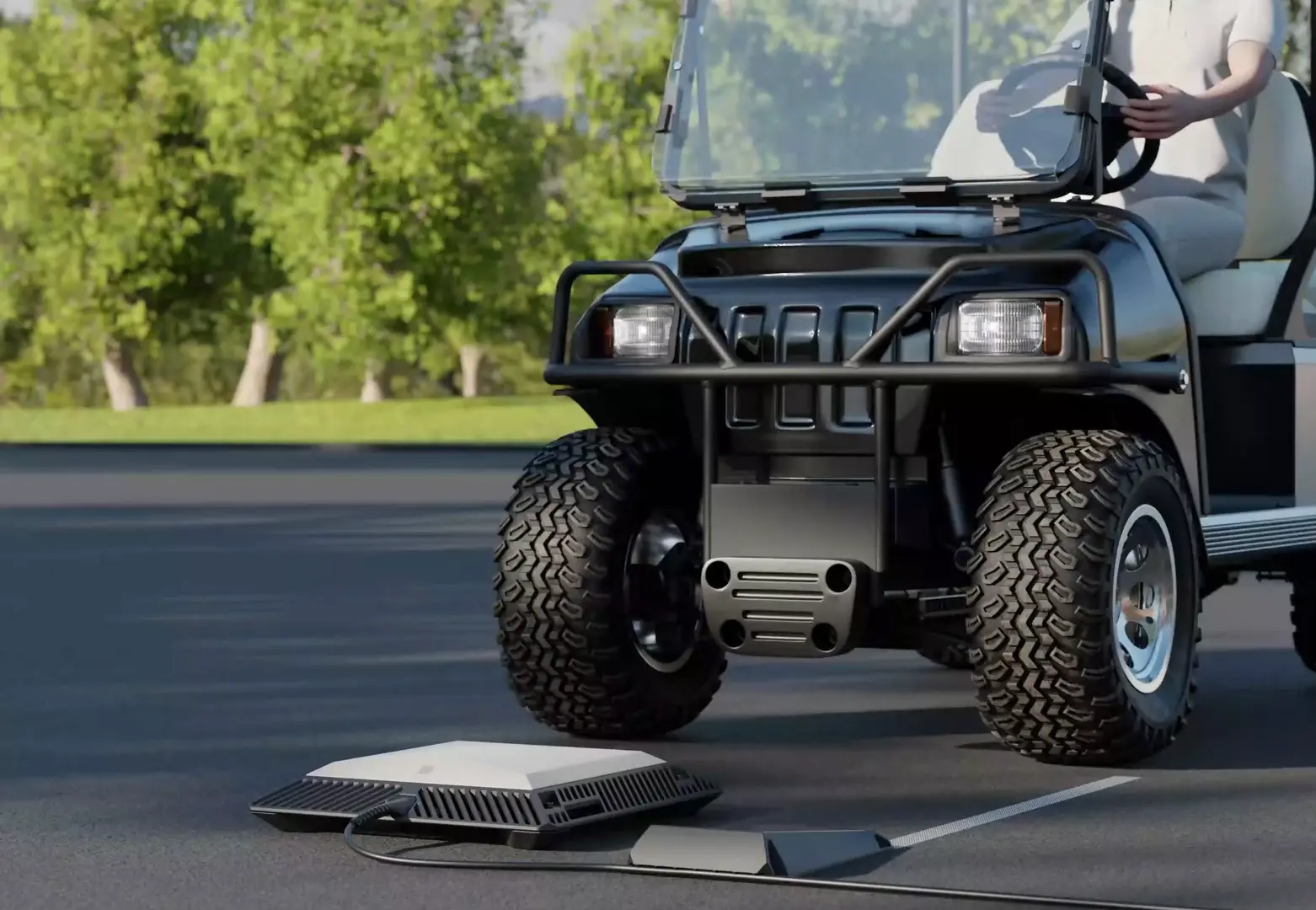
WiTricity's wireless charging technology offers a game-changing solution for electric golf carts and NEVs. The system features a Power Hub that transmits power to any cart equipped with a WiTricity Receiver. Users simply plug the Power Hub into a household outlet, set up the wheel guide, and start charging within minutes.

The WiTricity Receiver, installed on the cart either at the factory or by an authorized dealer, allows for effortless charging by parking the vehicle over the Power Hub. Delivering robust power transfer, WiTricity ensures quick and efficient charging, enhancing the convenience and efficiency of electric vehicle use.
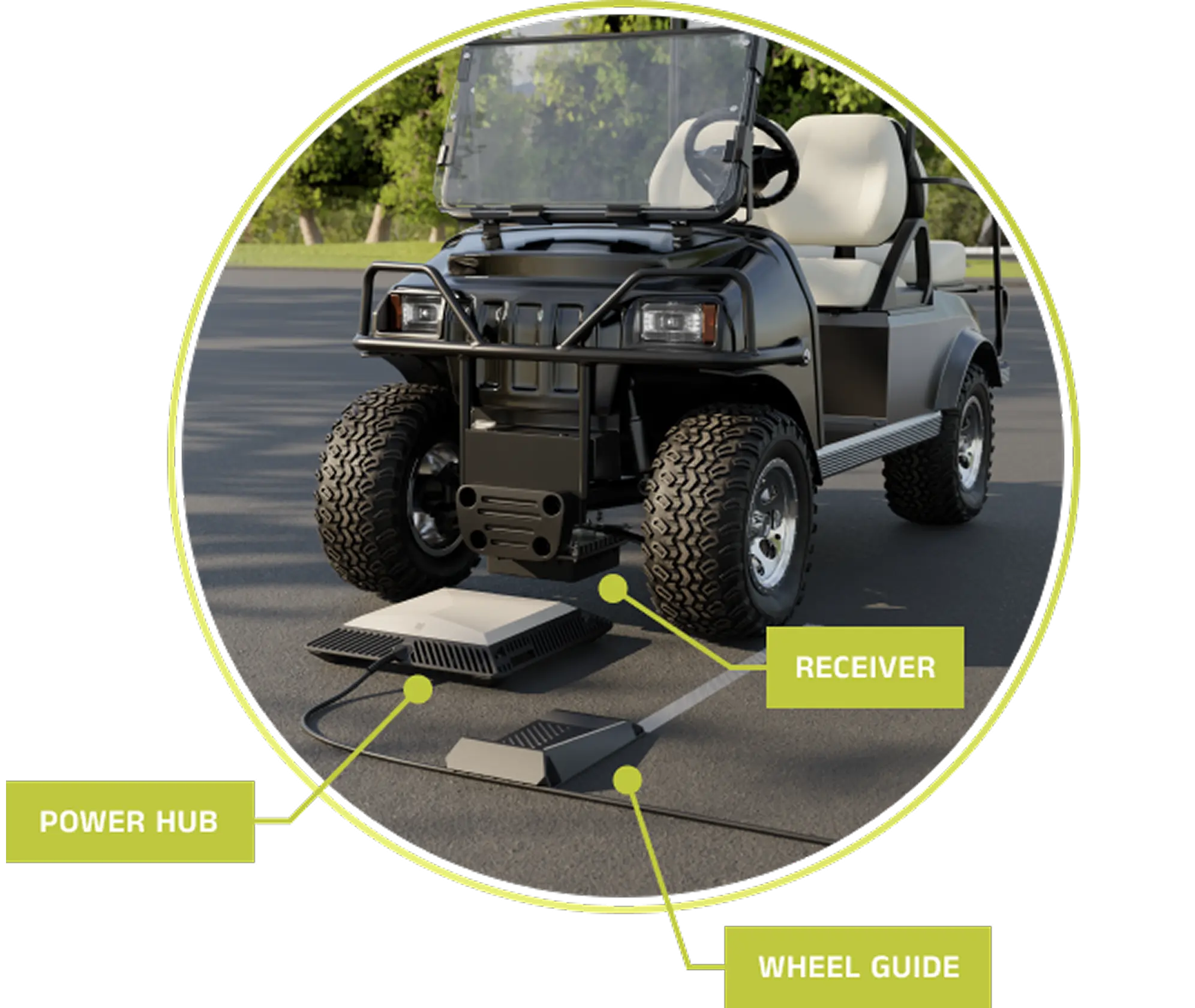
Black golf cart parked on pavement with a windshield and white seats, shown with three labeled components nearby on the ground: a square power hub with vent-like sides, a rectangular receiver near the front, and a wheel guide positioned between them, connected by cables.

Our Process

The project's success was underscored by the rapid, cohesive collaboration between design, engineering, and model making.

This synergy, combined with an iterative approach to prototyping and testing, addressed critical challenges such as wireless charging ranges, heat management, and environmental constraints, culminating in a well-designed, thoroughly tested product ready for the market.

Front-end design to define & solve user challenges

With daily hands-on work and seamless collaboration between design, engineering, and model-making, Fresco tackled user challenges head-on. Our iterative approach made the charging system efficient, ergonomic, and intuitive for home installation and use.
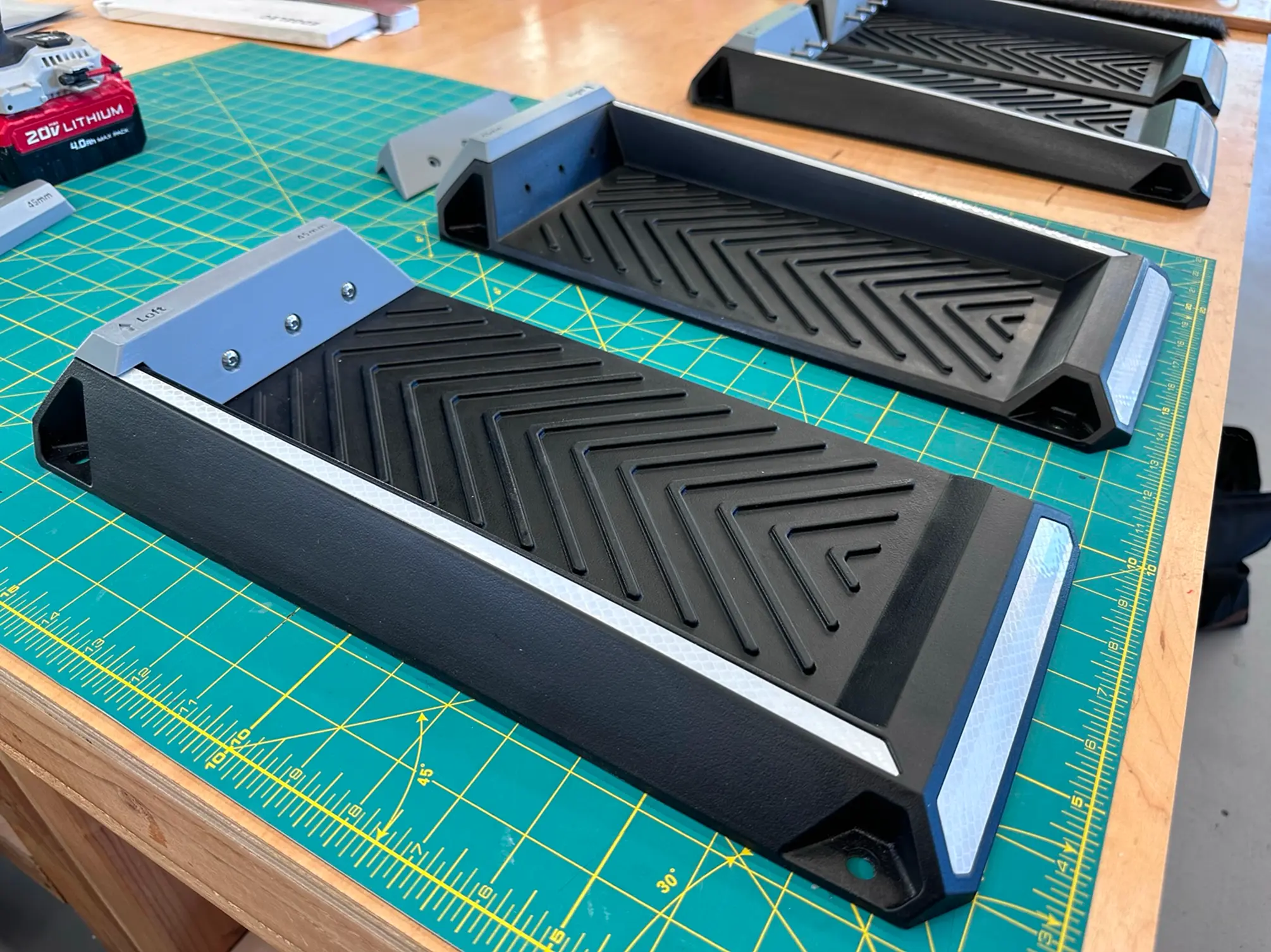
Black plastic pedal pads with diagonal ridges and reflective strips at the ends, arranged on a green cutting mat on a wooden workbench with a 20V lithium battery in the background.

Installation ergonomics

Using a weighted model of the WiTricity Power Hub, and rounds of in-person testing, we identified the ideal handle placement for installation.

Two men handling a board with black curved shapes and gray handles, one man is standing holding the board vertically, the other is crouching holding the board horizontally on a carpeted floor with yellow caution tape visible in the background.

Easy wheel alignment

Design-prototype-test cycles for wheel guides ensured accurate and effortless parking alignment.
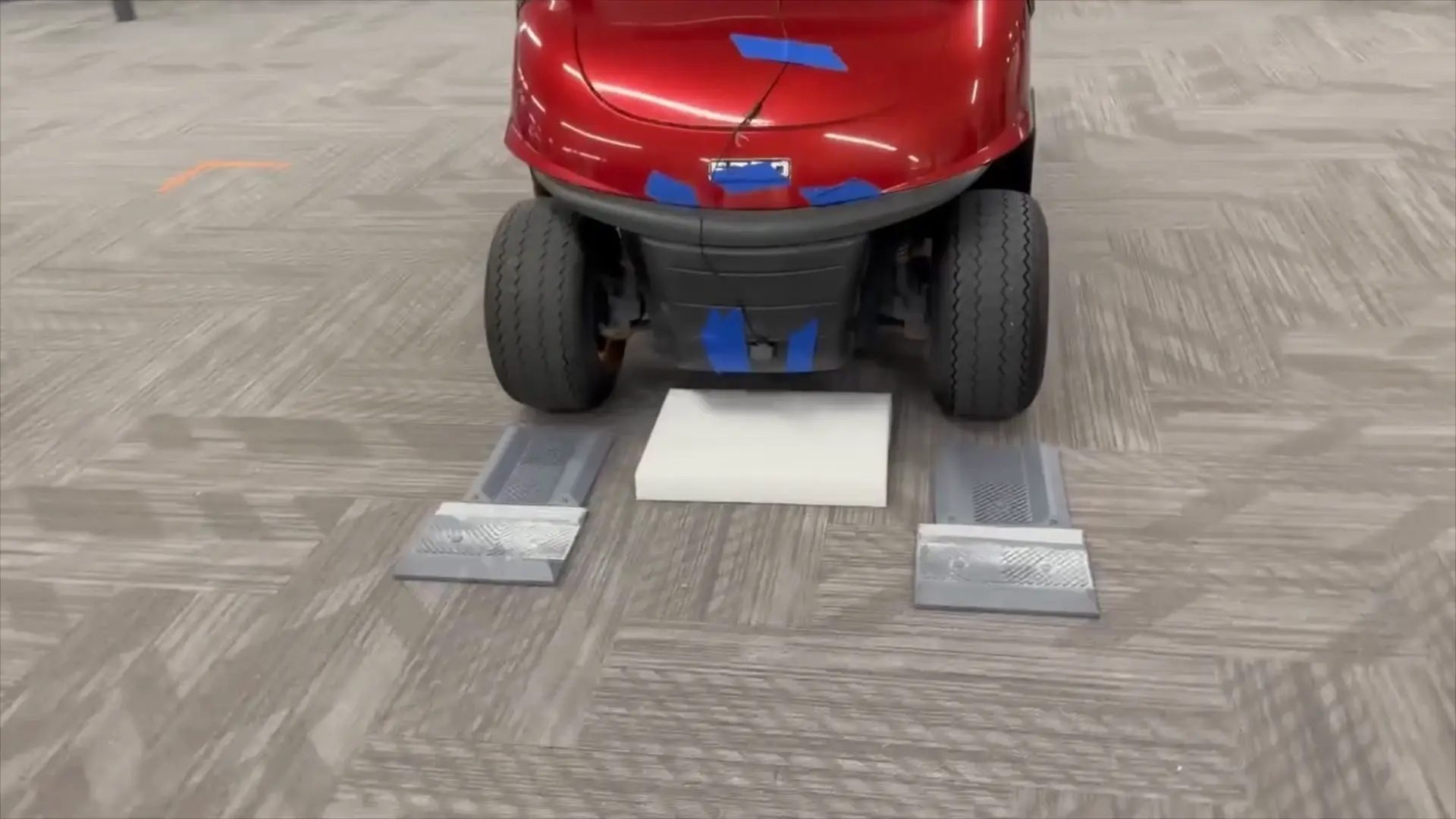
Vehicle-specific guides for optimum charge

We designed vehicle-specific recyclable cardboard guides to ensure correct component placement during installation for maximum charging capacity.
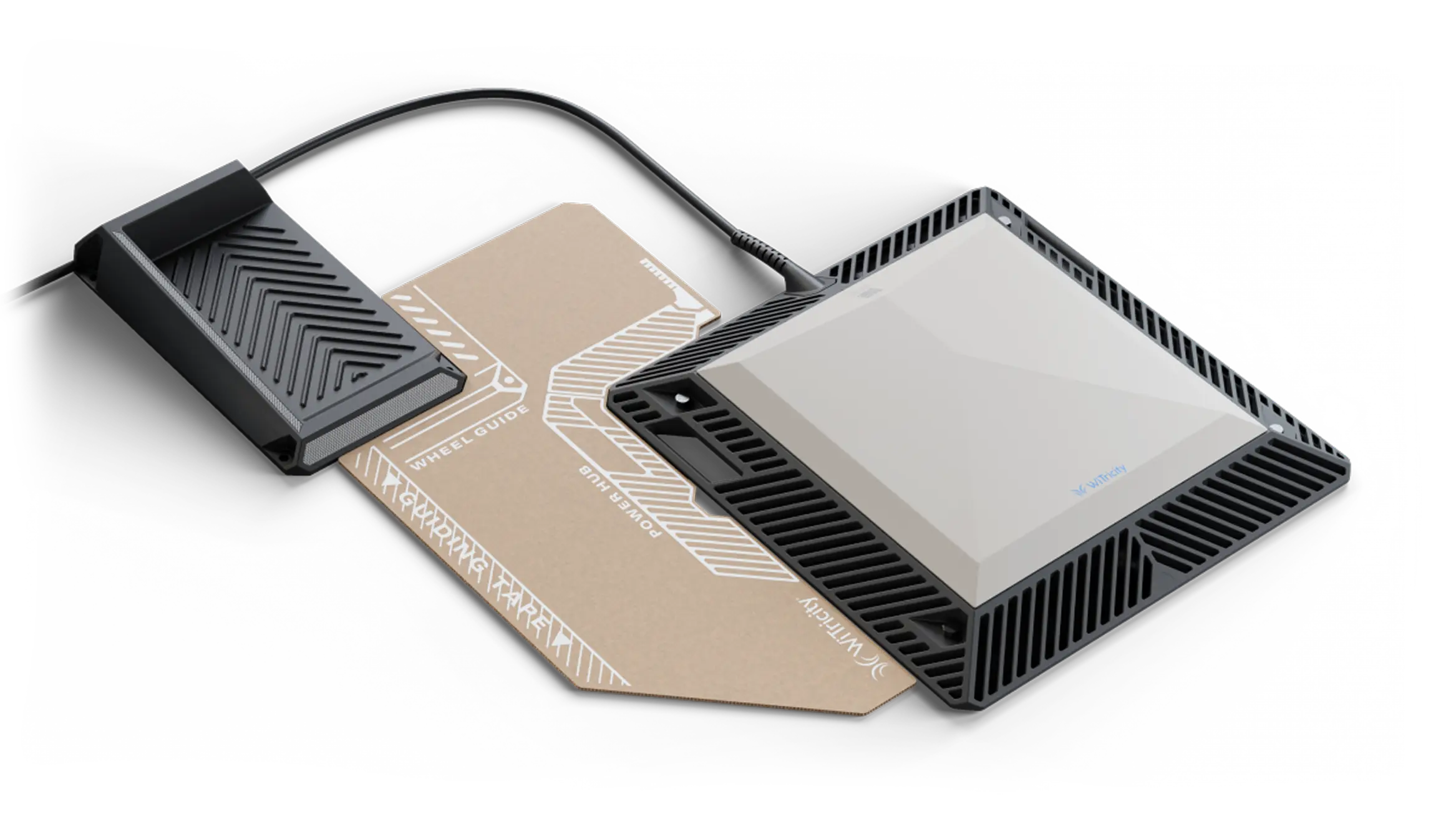
Wireless gaming router with a modern angular white and black design placed on a cardboard template labeled with wheel guide and power hub, connected to a black rectangular adapter via cable.

Adapting to vehicle heights

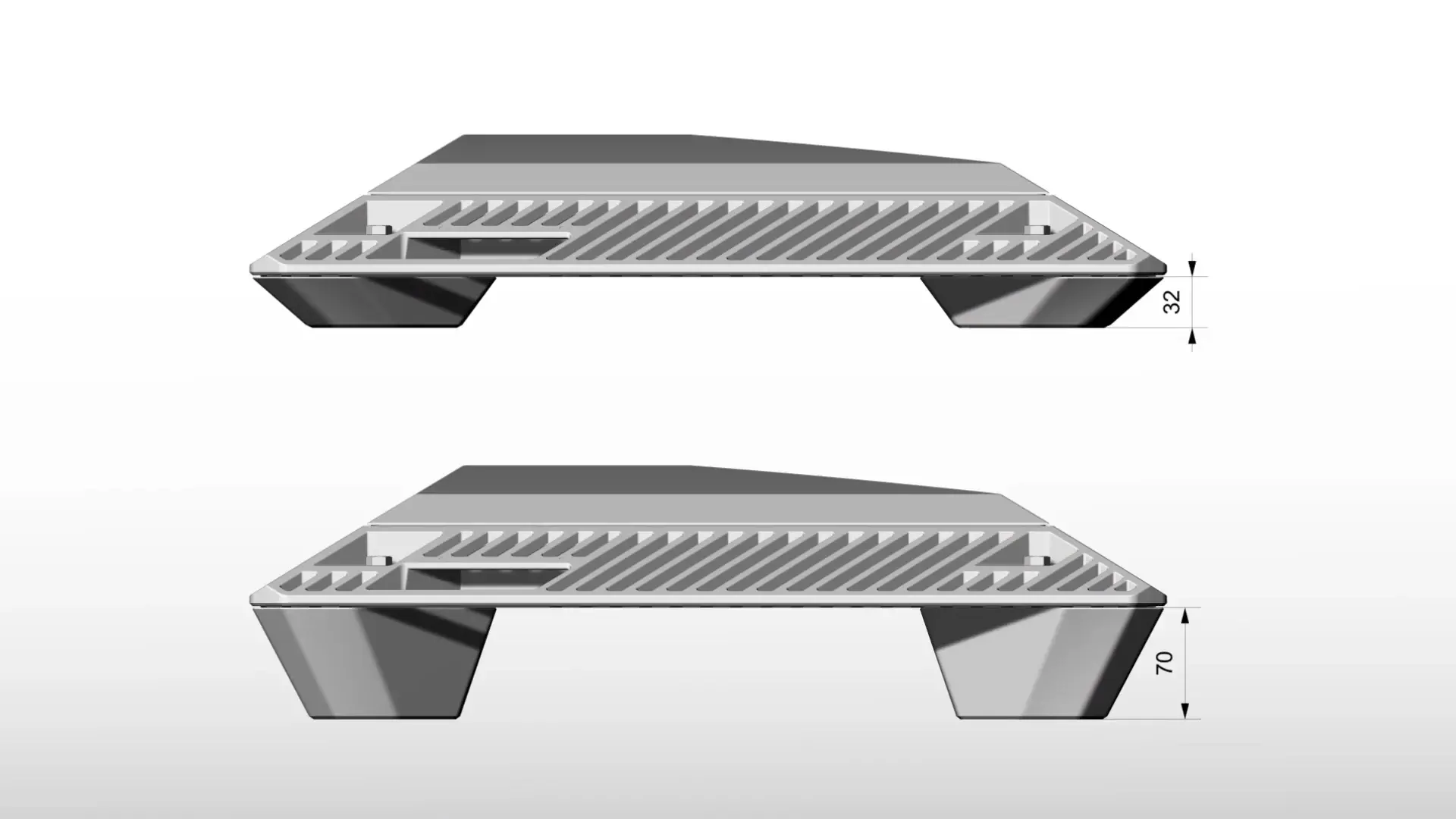
Various NEV carts have a wide range of heights, from low indoor use to higher off-road variants. We developed a riser system to adjust for the correct Power Hub height, ensuring compatibility with a range of NEV shapes and sizes.
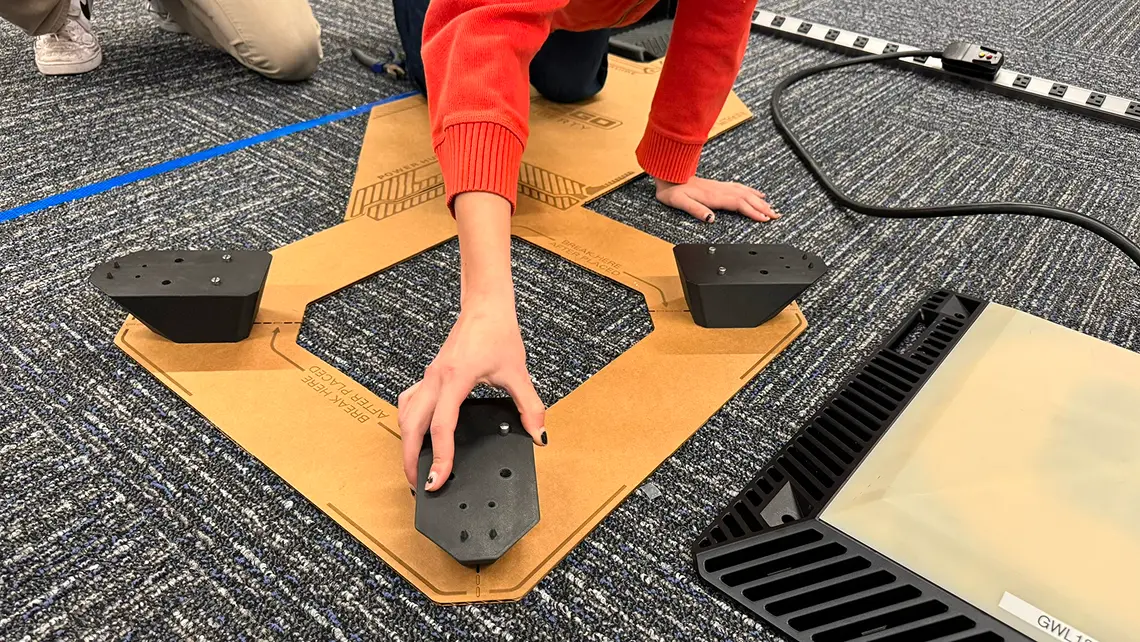
Person kneeling on carpeted floor assembling or positioning black plastic components on a cardboard template with blue tape lines and measuring tape in the background.

Short-run production & advanced materials testing

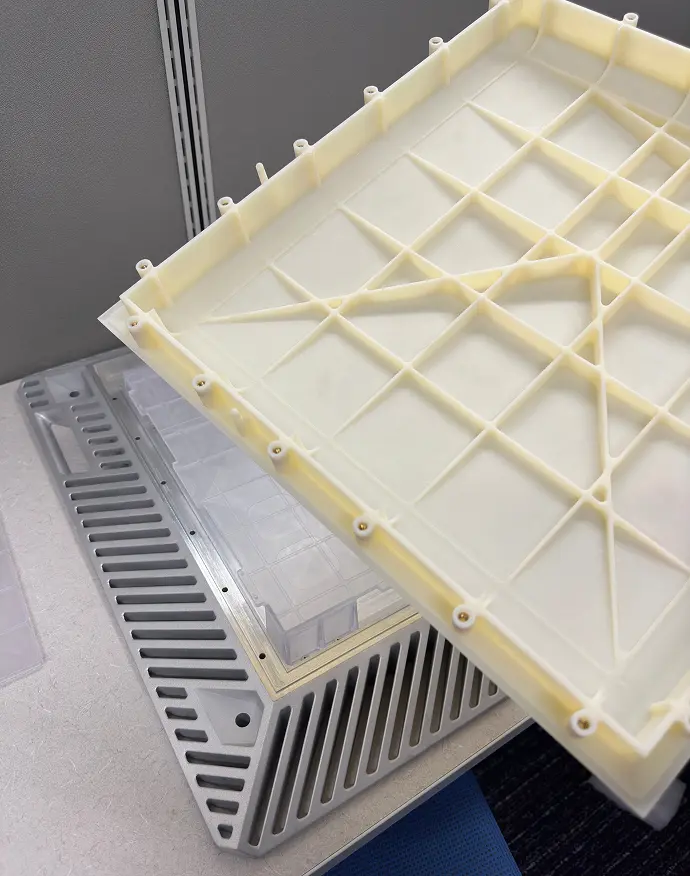
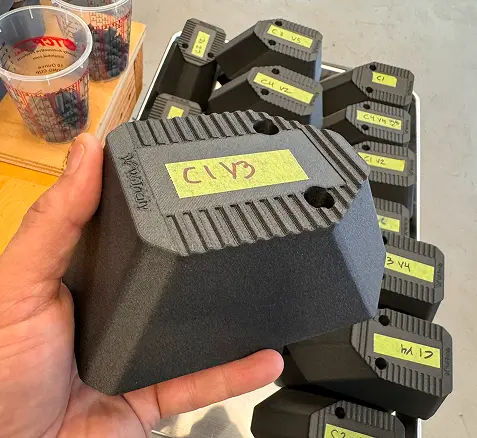
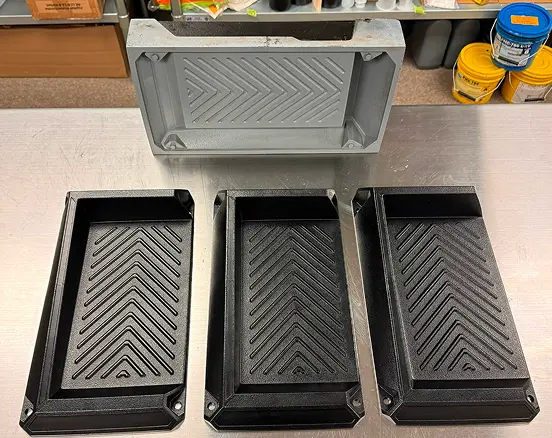
In this fast-tracked project, our goal was to give WiTricity certainty that their investment in tooling would be smooth, and that mass production methods such as injection molding and metal casting would be successful. We explored manufacturing feasibility and tested various methods to validate design and technology integration. Selective anodization of aluminum components was used to weatherproof the exterior while maintaining internal conductivity.
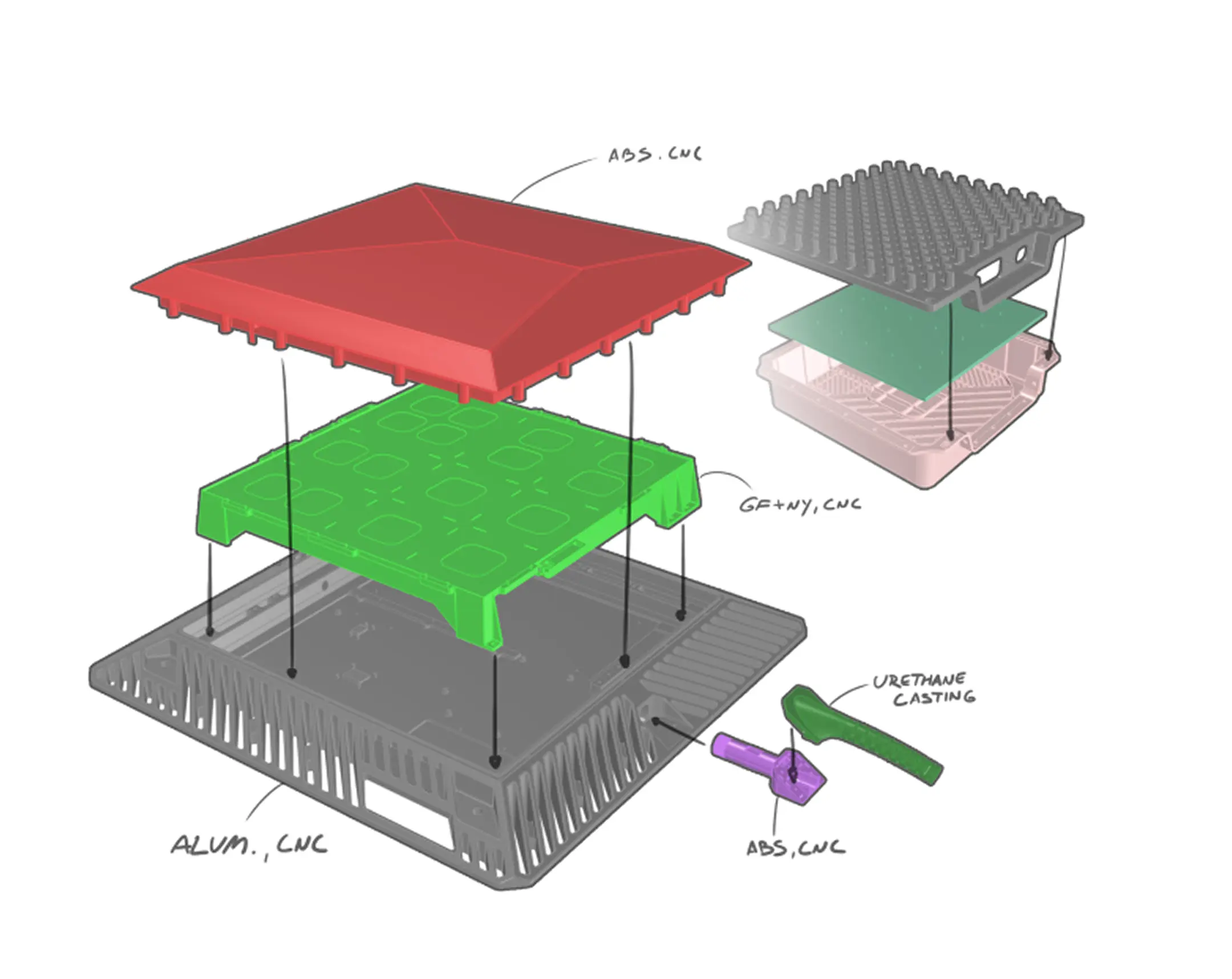
Exploded view diagram of a modular assembly showing multiple layers and components including a red ABS CNC top cover, green GF+NY CNC middle layer, and a grey aluminum CNC base, with additional parts labeled as urethane casting and ABS CNC fastener parts.

Production-intent
prototyping processes

We used a multi-material approach for functional, field-testing prototypes, providing real-world insights:

  • CNC'd aluminum with selective anodizing: Mimics production casting performance.
  • ABS product cover: matches thickness and ribbing detail of an injection molded part
  • Carbon-filled nylon risers: reflects strength of nylon-reinforced injection molding.
  • Cast urethane rubber wheel stops: Matches durability and flexibility of production vulcanized rubbers.
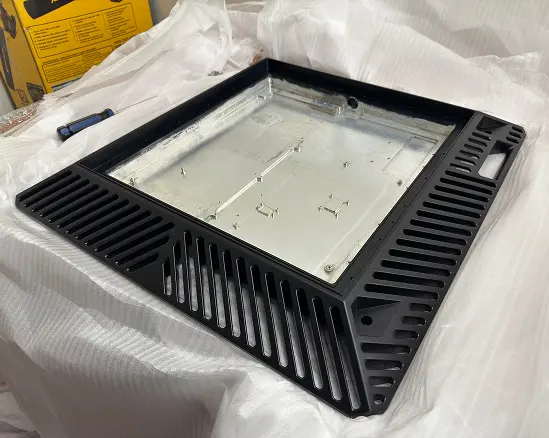
A black metal grate with parallel slats on three sides, surrounding a metallic square panel with screw holes and fixtures, placed on a white textured surface.
Close-up of a cream-colored plastic tray with grid and support ribs being held above a gray vented plastic base on a beige surface.
A hand holding a black, textured plastic component with a yellow label reading 'C1 V3'; more similar components with yellow labels are stacked in the background on a gray surface.
Four rectangular plastic trays with angled grooves arranged side by side on a metal surface, three black trays at the bottom and one gray tray at the top, with shelves and yellow and blue paint buckets in the background.