

Prototyping Before the Answer Exists
Prototyping is a springboard, not just a guardrail
Prototyping is an essential part of our design process, and often we mention it in the context of guardrails: comparing design options, vetting a CAD hypothesis, identifying design issues, and refining in DFM.
That's the version most people picture, prototyping waits patiently to be the output of something more defined to test itself against. We think that's backward (or at least incomplete), because the earliest stage of design is where prototyping can do its most illuminating and magical work, before any direction is decided, and while the questions are still big and half formed.
CAD is a hypothesis
We treat CAD as a hypothesis, a well-informed one built on real technical constraints and trained prediction, but a hypothesis all the same.
Industrial design needs physicality, and without it the process stays clean and theoretical. But a hypothesis that looked exactly right on a screen will fail, to some degree, in its physical manifestation as we interact and learn from it.
"The earliest stage of design is where prototyping can do its most illuminating and magical work, before any direction is decided and while the questions are still big and half formed.
The mediums
Working in a physical medium early lets you shape a surface or a form before anything has narrowed down to an answer. Prototyping at this stage opens the experimentation space, revealing new directions, and ways of thinking about usability, differentiation, and ergonomics.
The earliest prototypes tend to settle into a handful of mediums, chosen less because they're precise than because they're fast and flexible.
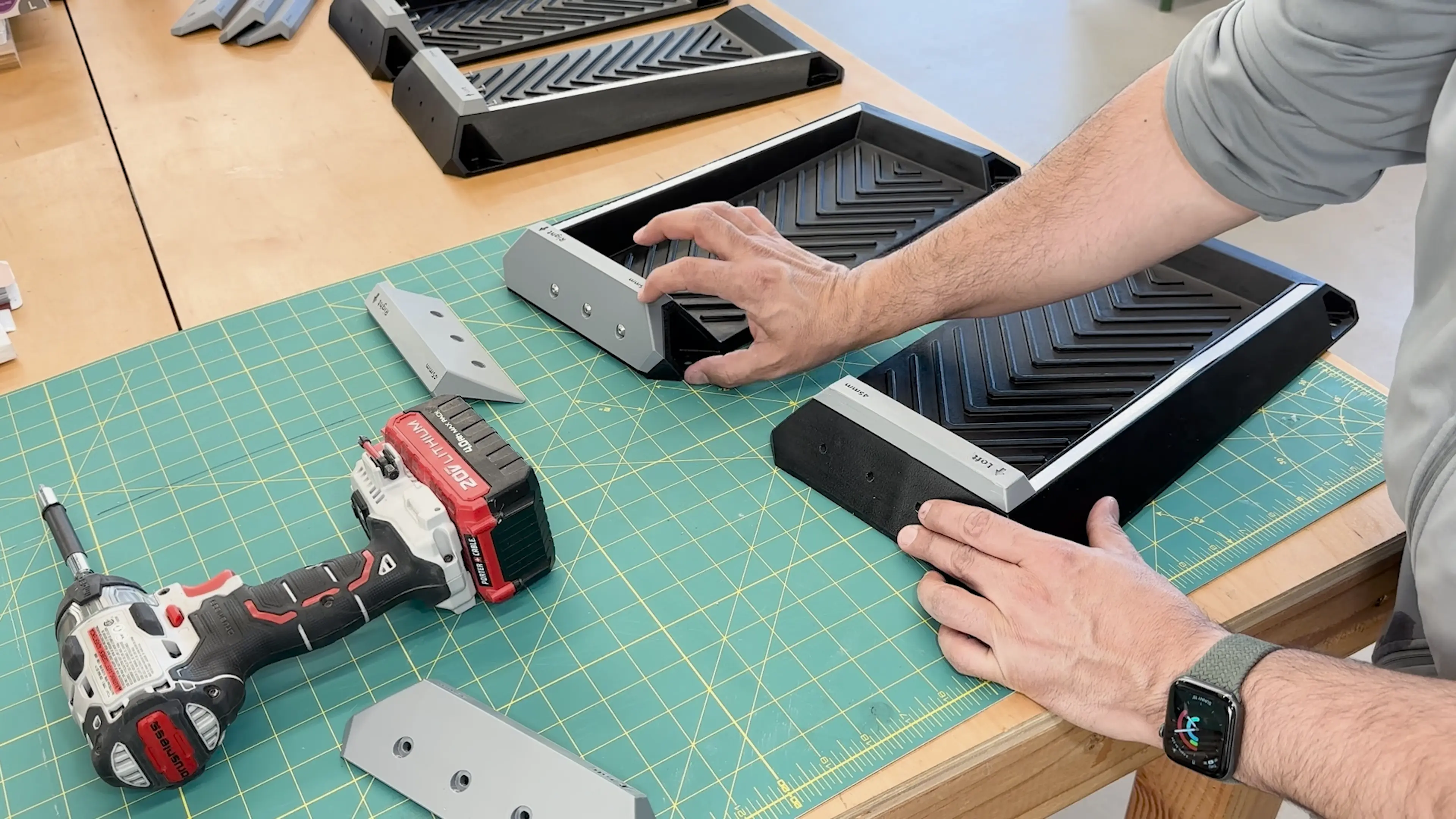
- 3D printing has become as ordinary to us now as printing a paper document was to us decades ago. It is something we reach for without a second thought (and it is quick enough not to need one). We print thin, mostly hollow and fast on drillable/sandable materials, for immediate editability.
- 3D prints + clay hybrids is one we use when we are designing a product that is worn, held, or interacts with the body, or, when organic form is a part of the design vision. Clay responds to the shape of a hand, and the surface can be shaped by hand with our fingers and tools in a way a 3D digital model simply can't.
- Foam, in whatever density the moment calls for, does something similar. You can sand it, cut it by hand, slice it with a band saw (or whatever's within reach), and it forgives you fast enough that speed becomes the whole point of using it.
- And then, there are what we call Frankenstein prototypes, built out of whatever is on hand: parts pulled from existing products, stock metal extrusions, cut and bent metal/acrylic sheets, sewing, 3D prints, etc. The purpose of these Frankenstein builds is to get some version of a new idea into a physical form fast enough to know whether it's worth chasing any further. We have seen amazing innovation evolve from our Frankenstein prototypes.
Models invite collaboration
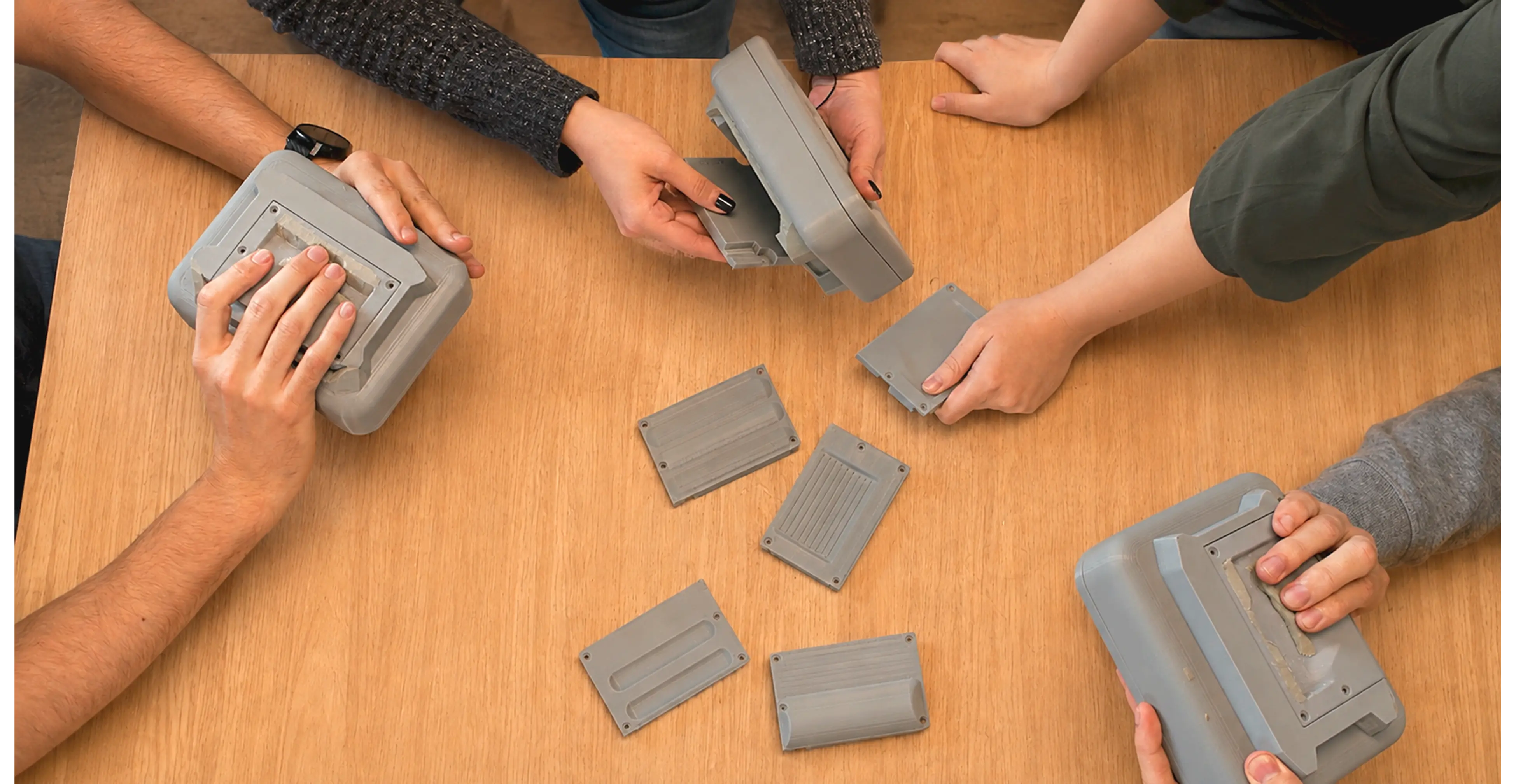
Working hands-on early in design opens the door for serendipity. Imagine, you're reviewing a model with a team, someone grabs an AirPods case from the table, sticks it on the prototype and says, “What about this?” And just like that, there’s something new to react to. A prototype becomes a physical discussion piece. Everyone can touch it, change it, add to it, and imagine something different. It's not the same as redlining a screen or commenting on someone else's CAD.
"A prototype becomes a physical discussion piece. Everyone can touch it, change it, add to it and imagine something different.
What an afternoon can open up
All of this exploratory journey is fast and nimble at expert hands, is low stakes by design, and that makes it work. Teams can confidently say yes to an idea they'd otherwise pass over, or one that doesn't have an obvious answer yet. And nobody has to be sure it's right before they try it, they just have to be curious enough to dream it up, build it and judge its potential.
So prototyping isn't mainly a way to prove something's right, though it's useful for that too. It’s also a way to find the version of the product that wasn't on anyone's list to begin with, which is a different kind of work than most people give it credit for.